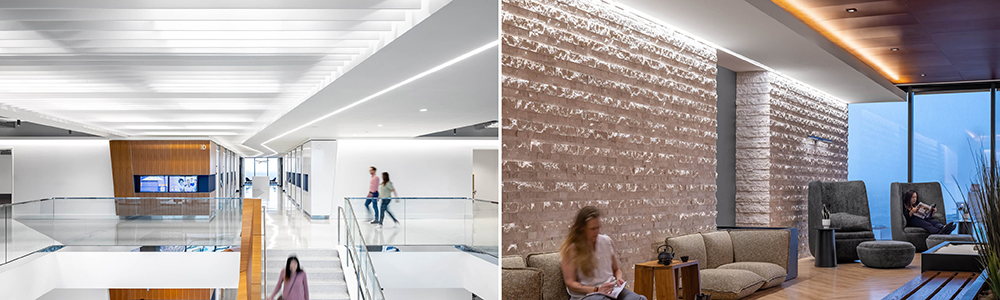
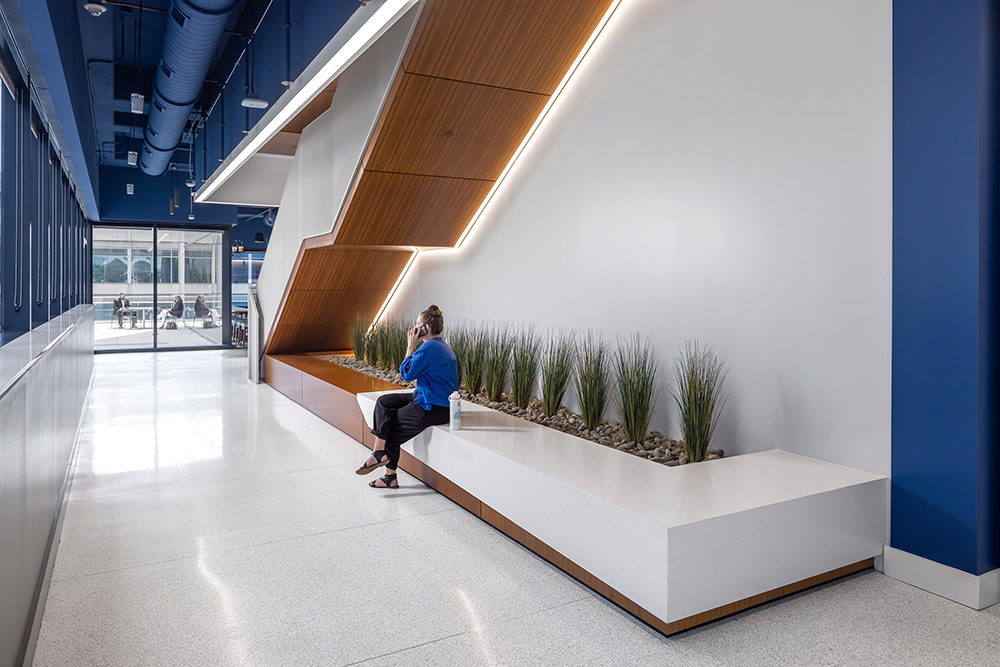
Patrick Mihalik is an Architectural Lighting Designer who enhances spaces through light. He helps manage projects, set client expectations, and applies his industry knowledge to bring designs to life. He loves the flexibility of his firm and the diversity of its projects. Patrick believes in being honest and managing expectations—while always finding ways to support and elevate the architect’s vision.
How did you get into lighting design? What drew you to it, and what was your path to where you are now?
In college, I majored in architecture and minored in theatrical lighting design. Even while I was pursuing both, it never dawned on me that I could combine the two, until I moved to Atlanta for my first job. I was originally hired for theatrical lighting, then someone asked if I’d do lighting design – and now it’s been 19 years! Funny how I never thought of it as an actual profession until it was brought to my attention.
How would you describe your design process?
I start with how the space will be experienced, then explore products that achieve that. Lighting starts as part of a larger conversation, then gets more granular – whether it’s highlighting certain walls or grazing walls or downlighting or general lighting. We first try to capture the look, then decide which products would be the best fit.
We talk about what the architect is envisioning, then I bring up suggestions of things they may want to light. It’s often related to lighting that brings out the architecture more and highlights various features. Vertical planes aren’t always top of mind for architects – that’s where we step in. By addressing those surfaces, we add value and help elevate the overall design.
What are the biggest challenges?
We’re often working to meet a tight lighting budget. It seems like every project is value engineered so realistic budgets aren’t always established up front. Typically, architects create renderings to share their vision with the client before we’re brought into the process. When we join the team, we work to find fixture solutions that stay true to those renderings. Sometimes, though, the concepts shown – while visually compelling – aren’t fully feasible from a physics or monetary standpoint. Lighting effects are added to enhance the renderings and help the client connect with the design, but once we get into the technical side, we help find ways to bring that vision to life in a practical and achievable way.
What would you say is your primary differentiator?
I have a small, but diverse and really talented team. It’s just me and two others. One has a lighting showroom background, so she’s great at decorative lighting. She’s able to help us source more affordable alternatives that achieve the look the architect is after. Our other team member is great at using several different programs to produce incredible renderings of the designs. I think those combined strengths help us differentiate. Having cross-functional teams of Engineers and Consultants here at N&B that we can bounce ideas off of in terms of placement and feasibility makes us very versatile. This often eliminates the back-and-forth of coordination with outside firms. These combined strengths are what differentiates us in the marketplace.
What are your must-haves or non-negotiables in lighting fixtures?
For me, it’s direct/indirect linear pendants with a batwing distribution for direct, and wide distribution for indirect. Everyone makes fun of me because they know I love recessed linear fixtures with batwing. It’s my go-to. I like spacing fixtures further apart while still meeting footcandles required. For downlights, I like fixtures with Solite lens at the trim – it looks cleaner. I’m also starting to use more fixtures with low UGR, with a solid lens or micro baffle.
What do you look for in terms of hiring for your team?
I look for someone with a diverse range of knowledge in lighting, but who’s also able and willing to learn and grow. I’m all for teaching the next generation about this profession, which is ironic because when I was in school and we touched on lighting, I couldn’t have cared less. I didn’t connect with it until later. Knowing that, my team thinks it’s funny that I’m so passionate about it now.
What would be your ultimate dream project?
For me, it would be an upscale hospitality space, like a really lavish, all-inclusive compound in Japan. So if anyone’s got a project like that in the works, you know who to call.
What are you most excited about related to what’s currently happening in lighting trends and innovation, or what’s on the horizon?
That’s difficult to answer, because I feel like trend wise, we’re somewhat stuck or stagnant. LED has come a long way, but it’s still using traditional form factors. I’m not seeing many manufacturers breaking away from typical form factors of cove linear and downlight. What would that new version be? I don’t know, ha-ha. But we have this new technology, and I’d love to see it used to its full potential.
PROJECT BY PATRICK MIHALIK
Elevance Health Workplace, Atlanta GA